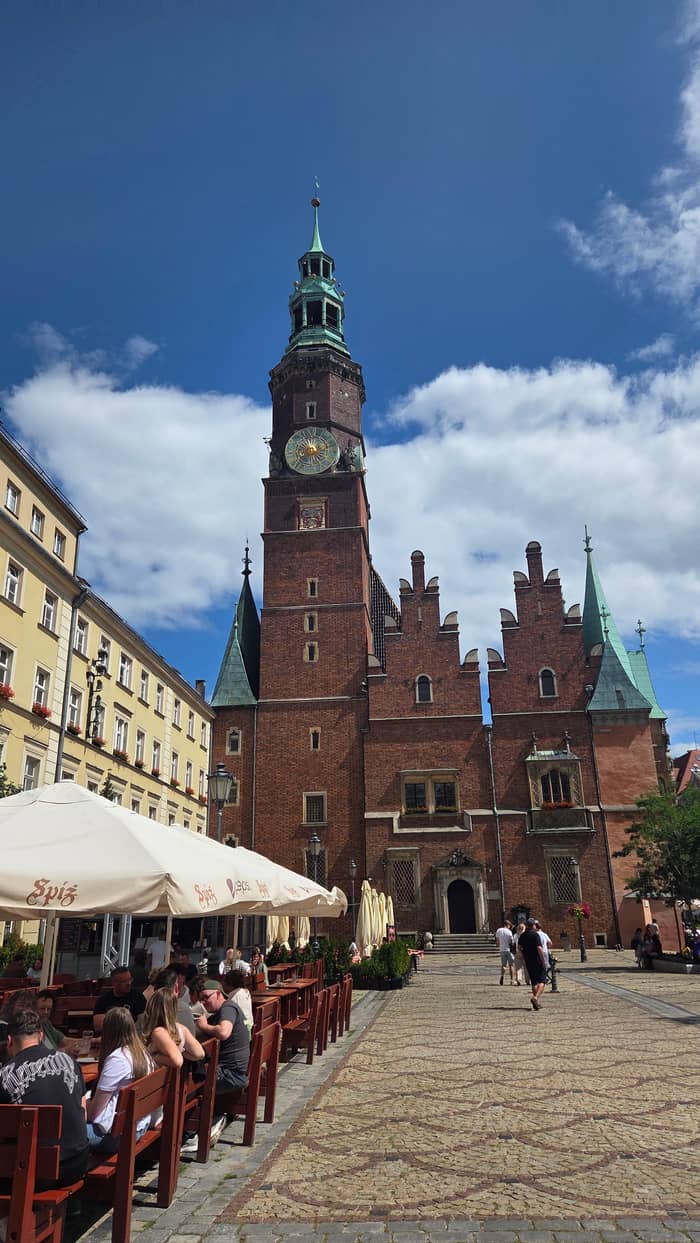
Protest roots
Papa Dwarf
Swidnicka Street
- Arrived1 June 20013
- RoleChairs the Dwarf Council
- Find himSwidnicka Street
Choosing helper
Two questions, one dwarf hunt
Say how you like to explore and who is with you, and a matching tour appears with its starting price.
Recommended for you
from €17
2.5 hours from the Fredro monument with a live guide in English; you decide what to give the guide.
Recommended for you
from €12
1 hour from the Tourist Information Center, with a live guide in English or Polish and audio in 10 more languages.
Recommended for you
from €29
2 hours with a local host in English; private groups available.
Recommended for you
from €36
A private 2-hour walk in German or Polish via Salt Square, Papa Dwarf and the Fencer fountain.
Recommended for you
from €15
1 to 2 hours by electric car with an audio guide in 12 languages.
The Wroclaw dwarfs began as painted protest figures and became hundreds of bronze statues. Here is why the city has gnomes, who decided it, and how to meet them.
Editorial team, wroclawwalkingtour.quest · Updated November 9, 2026 · 8 mins to read
Basics
English speakers call them dwarfs, gnomes or sometimes elves, and you will see all of them on signs and souvenir shelves. In Polish they are krasnale, or krasnoludki, small bearded figures in pointed caps that belong to old folk belief rather than to fantasy novels. The city's tourism portal notes that Polish folklore never settled on a single word for the creature: each region gave it its own name and its own habits.9 So whether you search for dwarfs or for gnomes in Wroclaw, you are looking for the same little bronze residents.
The portal lists a long string of regional names. Skrzat, for example, is the term used in Pomerania, Greater Poland and Silesia, the region Wroclaw belongs to.10 The word krasnoludek is explained by the red cap the little figure wears, which gives the name its root.11 That cap matters more than it seems. It is the detail that tied a fairy-tale creature to a political joke, and it is why the dwarfs you meet today almost always wear a hat, whatever else they are doing.
None of this makes the statues mythological. Every figure on the pavement was cast, paid for and bolted down by someone: the city, a company, an institution or a private sponsor who wanted a mascot at the door. What makes Wroclaw different is the story that runs underneath, part history and part invented legend, which the city tells with a straight face and a wink. Knowing both halves of that story turns a hunt for photos into a short lesson in the city's recent past.
A short glossary
| Word | Language | What it means here |
|---|---|---|
| Krasnal, krasnale | Polish | The everyday word for the city's dwarfs |
| Krasnoludek | Polish | Dwarf, named after the red cap |
| Skrzat | Polish, regional | Used in Pomerania, Greater Poland, Silesia |
| Papa Krasnal | Polish | Papa Dwarf, head of the Dwarf Council |
| Dwarf, gnome | English | Both used for the same statues |
Names and their regions as Visit Wroclaw lists them; Papa Dwarf's date is in the city's dwarf database.9,10,11,3
Why does Wroclaw have gnomes at all? The most widely told account starts in the 1980s, under communist rule.1 Small paintings of a dwarf began to appear on the city's walls: a smiling gnome in an orange cap, holding a flower.1,15 They were the work of the Orange Alternative, a movement that used humor and dwarfs to mock the absurdities of the system.2 A painted dwarf was hard to punish without looking ridiculous, and that was the point. Absurd street happenings answered an absurd reality, and passers-by understood the joke without a word being said.
The movement was led by Waldemar Frydrych, known as Major, and the city's dwarf database still names him as the head of the Orange Alternative.16 Most of the painted dwarfs appeared on Swidnicka Street, the long promenade that runs south from the Market Square.17 It was also where the Orange Alternative most often staged its happenings, which is why Papa Dwarf later chose the same street as his home.18 Walk it today and you are walking the route of those protests.
Some of the bronze figures keep that memory alive in their own backstories. Przodownik, for instance, signed up with the movement, the story goes, once he saw grown-ups in dwarf costume marching down the street in the 1980s.19 The tone is playful, but the history is real. When you meet a dwarf with a raised fist or a protest sign, it is a small salute to the people who used laughter as a tool at a time when open dissent was dangerous.
Counting the dwarfs
In the city's dwarf database, the jump from paint to metal comes with Papa Dwarf, who took up his post on 1 June 2001, a single bronze figure where a painted movement had once worked.3 His official biography makes him a veteran: a former activist of the Orange Alternative who now chairs the Wroclaw Dwarf Council and has the final say in dwarf disputes.25 The Polish Tourism Organisation cites one theory in which Papa Dwarf was the first dwarf in Poland and made his home here.26
Look for him on Swidnicka Street, a short walk south of the Market Square, where the promenade crosses the busy ring road. His place was chosen deliberately: this was the main promenade of the protest years, the stage for most of the happenings.18 Papa Dwarf is the link between the movement and the mascots. Everything that followed, from bankers' dwarfs to firefighters' dwarfs, grew from the idea that a small bronze figure could carry a story about the city.
If you only have time for a single dwarf, make it this one, then turn around and walk back toward the Market Square, where the density of figures rises sharply. The guided walk this site offers meets at the Fredro monument on the square and lasts 2.5 hours, from €17, a convenient way to hear the background while you spot them. Bring a phone with space for photos: the hunt becomes addictive quickly.
Where to start
Protest roots
Swidnicka Street
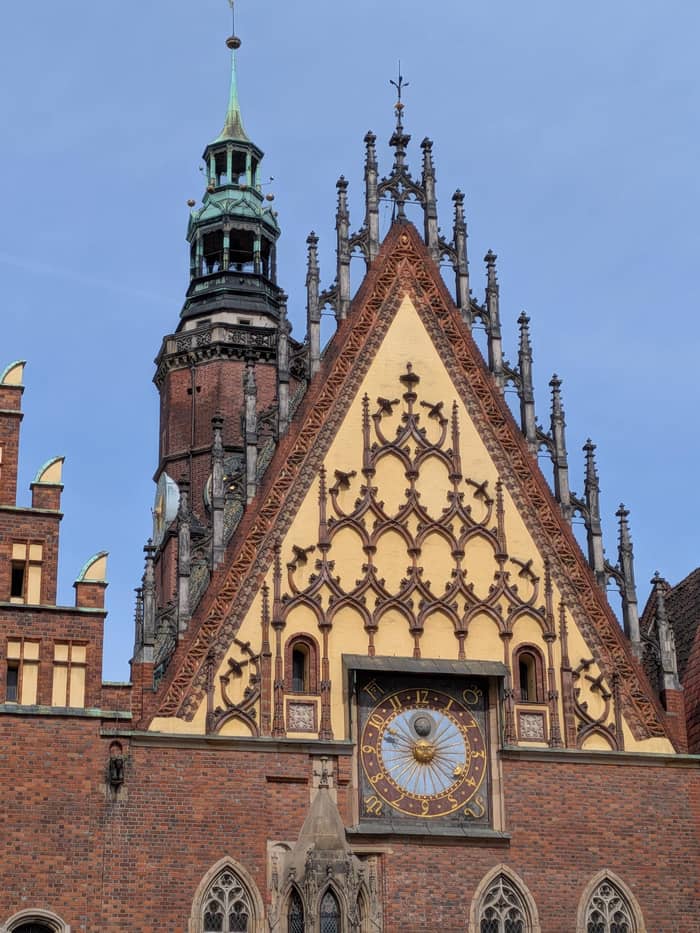
Early figure
Swidnicka Street
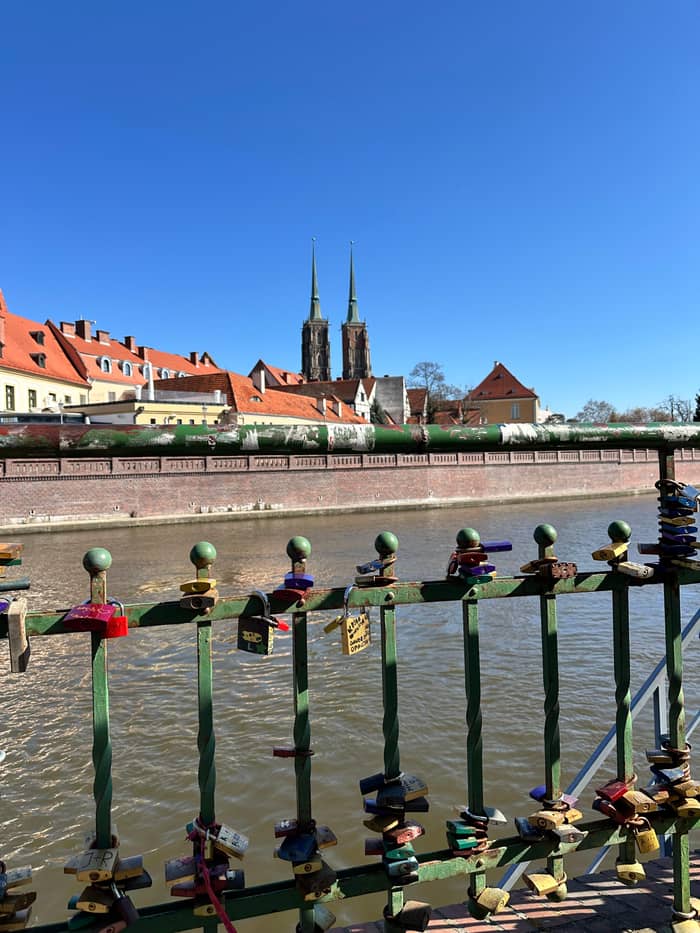
Kindness dwarf
Market Square
The bronze population began in earnest in 2005. That year the city authorities decided to put the first official dwarfs on Wroclaw's streets.4 Their designer, the sculptor Tomasz Moczek, took on the job for the city's own promotion department.29 His website names that first commission: a butcher, two dwarfs pushing a ball, a washer, a fencer and a guard, all in place by the summer.5 The Sisyphus pair, pushing a ball on Swidnicka Street, date from 2005 as well.21 The Promotion Office supplied the first funds, and an advertising agency promoted the idea.30
From there the project grew by invitation. Anyone who wants a dwarf outside a building needs no arrangement with the city at all, only the consent of the landowner.31 You then find a sculptor to design and cast the figure, mount it and register it in the city's online database.32 That open door explains the variety. Banks, hospitals, schools, hotels and shops commissioned their own patrons, and the portal notes that more and more companies and private people choose to erect a dwarf of their own.12
The city also invented a mythology to match. Visit Wroclaw collects several legends: a prank-playing goblin who arrived on a raft and had to be driven out by dwarfs the city called in for help, and an older tale in which dwarfs helped with chores and crops when Breslau was still a village.33,34 Another claims that local place names come from dwarfs, so that Biskupin takes its name from Biskupek and Szczepin from Szczepik.35 Nobody expects you to believe it. Everybody hopes you enjoy it.
Price a dwarf outing
Choose an outing and add your travelers.
Compare 3 alternatives
Choose an outing and add your travelers.
≈
View≈
View≈
ViewThese from-prices come from GetYourGuide and are converted using the ECB reference rate; the exact price shows at checkout.
From paint to bronze
1980s
Orange-capped dwarfs appear on walls, the work of the Orange Alternative.1,2
1 June 2001
Papa Dwarf takes up his post on Swidnicka Street.3
2005
The city orders its first figures, installed that summer.5
2005 onward
2020
Visit Wroclaw lists about 360 figures in the second half of the year.13
Every September
A free 3-day festival for children on the Market Square.14
There is no fixed answer, and the official sources say so themselves. The Polish Tourism Organisation calls the number a mystery and puts it at about 1,000.7 Its other Wroclaw page speaks of over 300 figurines to track down.6 The city's tourism portal arrived at about 360 for late 2020, and its piece on the dwarf workshop speaks of nearly 400.13,20 The family route on the same portal goes further and says almost a thousand already live here.36
The spread is not sloppiness. New figures appear all the time, older ones are stolen or moved, and some stand in private courtyards or outside the center, so any count is a snapshot. The portal adds that the figures can be found across all districts and that their numbers keep climbing.37 They have also spread beyond the Old Town into districts far from the center.28 The chart on this page lines up the official figures so you can see how the estimates have moved.
For a visitor, the practical answer is simpler: you will not see them all, and you do not need to. The Old Town holds the densest cluster, and a relaxed walk between the Market Square, the University and the islands will show you plenty of them. Our dwarf map shows where the best-known figures stand, and our guide to the famous ones introduces them by name. Treat the total as trivia and the hunt as the real fun.
Video
Sir Manatee on YouTube · Playback files load only once you tap play.
These paintings were the work of a movement known as the Orange Alternative, which used humor and dwarves to fight the absurdities of communist times
Before you go looking
The dwarfs work because they reward attention. They sit on windowsills, climb lamp posts and lurk at knee height by doorways, so you start looking at the city more closely than you would otherwise. Today the Polish Tourism Organisation counts them among the symbols of Wroclaw.38 Families turn the walk into a game, and adults find themselves crouching on the cobbles for a photo just as often. A dwarf also tells you something about the building it guards. Zyczliwek, the kindness dwarf by the fountain on the Market Square, even has his own day: November 21st is the Day of Kindness and of Zyczliwek.39,22
Once a year the dwarfs get their own party. The Wroclaw Dwarf Festival is an annual festival for children with a parade on the Market Square and events in the Old Town Park.40 It generally lasts 3 days, from Friday to Sunday, usually in the second half of September, and entry is free.14,8 There is a joint dwarf search around the square for children aged 5-10 that starts at the Fredro statue.23 Adults get a Dwarf Silent Disco from 9 pm until midnight.41
Out of festival season, the city keeps the game going with print and audio. A printed dwarf monthly is handed out at the Tourist Information Center at Rynek 14 while copies last.24 There is also a podcast of Dwarf Tales with 8 stories, and a downloadable guide that follows the dwarfs through the city.42,43 If you prefer company, our guided group walk with an English-speaking guide passes plenty of dwarfs between the square and the cathedral island.
FAQ
In Polish they are krasnale or krasnoludki; Polish folklore has many regional names for the figure.9
He has designed them since 2005, first for the city's promotion office.29
Sources
New to Wroclaw? Ask a real person about the walk.