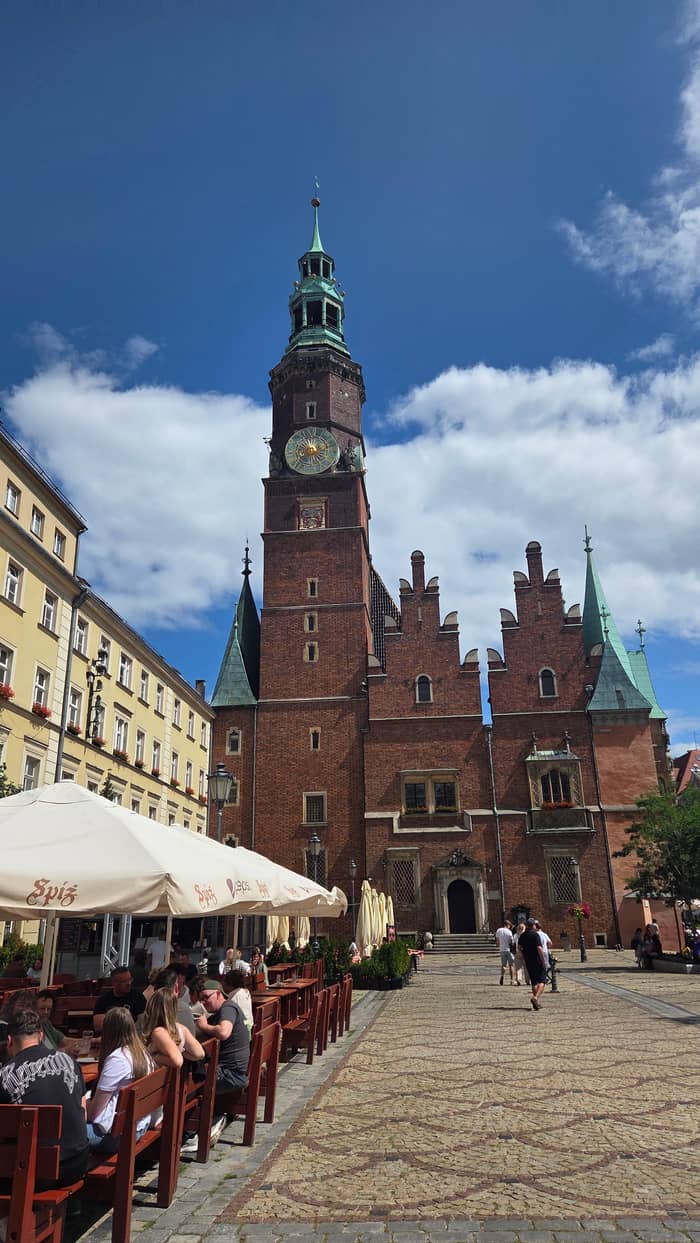
The setting
Islands and bridges
The city on the Oder
- Islands12
- Bridges112
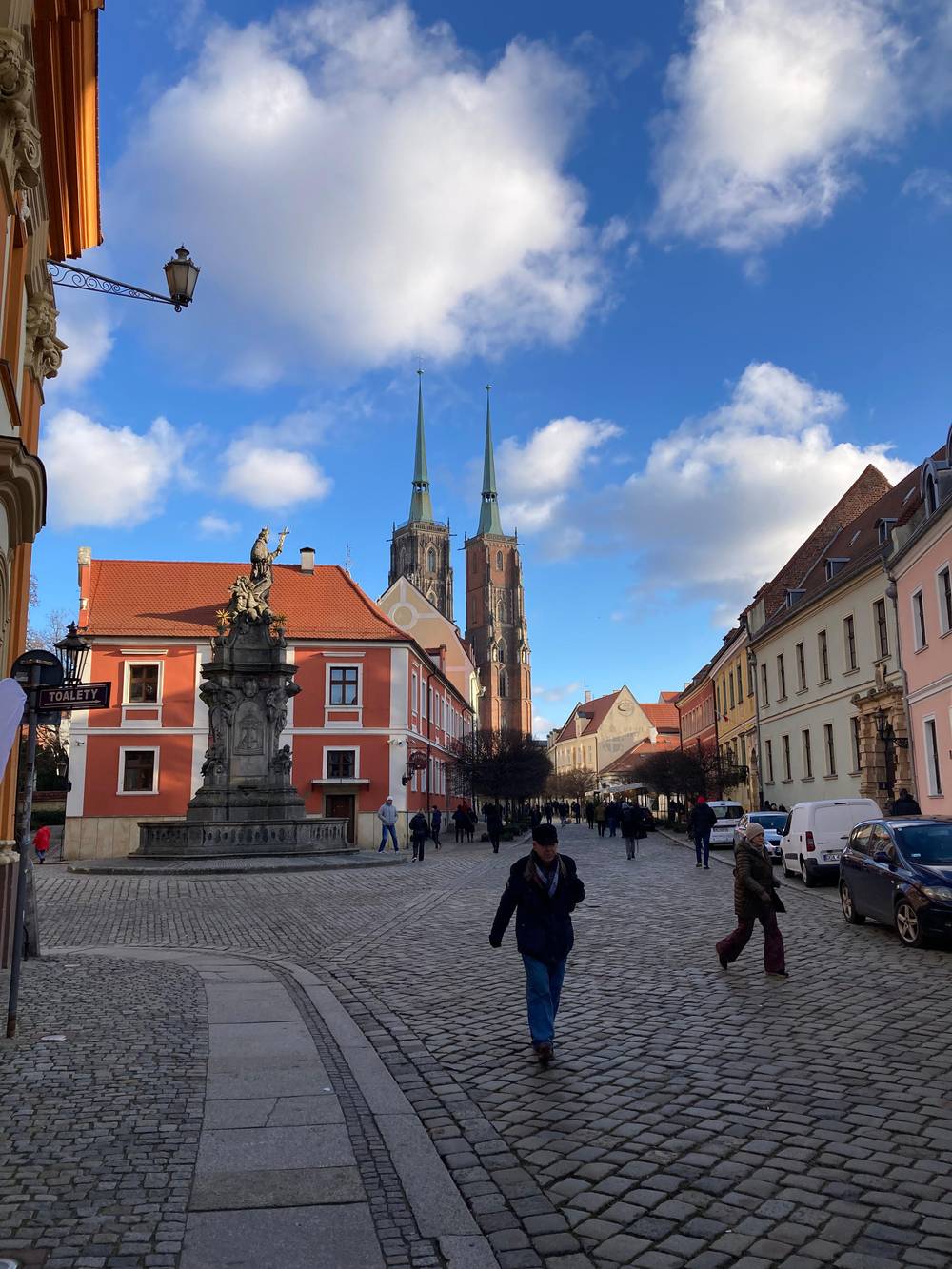
- Oldest partOstrow Tumski
Choosing helper
Two questions, one plan
Say who is travelling and what you love, and the tour that fits your first day appears with its starting price.
Recommended for you
from €17
2.5 hours from the Fredro Statue to Ostrow Tumski, with a live guide in English.
Recommended for you
from €12
An hour through the Old Town and its dwarfs, easy for young legs.
Recommended for you
from €15
1 to 2 hours seated, with commentary in 12 languages.
Recommended for you
from €29
A 1.5-hour evening at the Centennial Hall fountain show.
Is Wroclaw worth visiting, or just a stop between Berlin and Krakow? What makes the city different, how safe it feels, what it costs and the season that suits you.
Editorial team, wroclawwalkingtour.quest · Updated November 9, 2026 · 7 mins to read
Basics
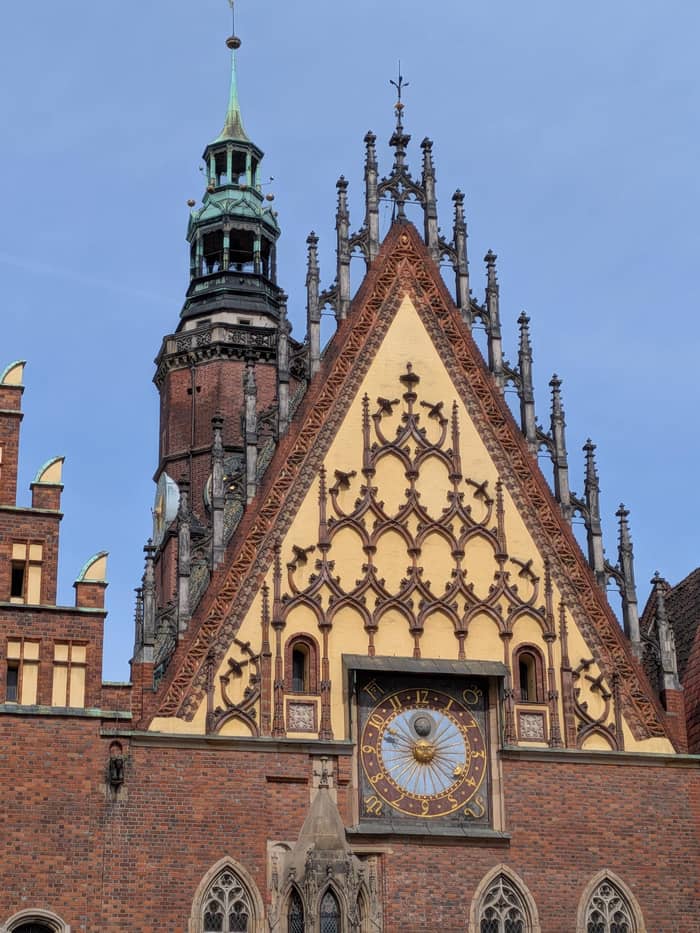
Yes, and for reasons that are easy to see within an hour of arriving. Wroclaw sits on the Oder and spreads across 12 islands linked by 112 bridges, according to the city's own tourism portal.1 The Market Square at its heart dates from the 13th century and ranks among the largest market squares in Poland.2,6 Few cities pack so much water, brick Gothic and color into such a walkable centre.
Visitors have noticed. The city counted 7 million visitors in 2025, its highest figure yet and 6% more than the year before.3 Germans lead the foreign arrivals, followed by Czechs, the British, Norwegians and Italians.7 That popularity has not turned the centre into a theme park: Wroclaw is the capital of Lower Silesia and a working university city, so the streets feel lived in.8
Who will find it less rewarding? Travelers who want a beach, mountains or a single headline monument. Wroclaw is a city of many good things rather than one famous one, and it rewards slow walking more than box-ticking. If that sounds right for you, start with a guided walk that ties the square, the bridges and Ostrow Tumski together in a single morning of 2.5 hours.
Wroclaw in figures
| What | Figure | Source |
|---|---|---|
| Islands | 121 | City tourism portal |
| Bridges | 1121 | City tourism portal |
| Oder within the city | 26 km14 | City tourism portal |
| Visitors in 2025 | 7 million3 | City Office |
| Michelin-recommended places | 2317 | City Office |
| Christmas Market visitors | over a million23 | City Office |
Figures as the city publishes them; visitor counts are estimates from mobile phone data.3
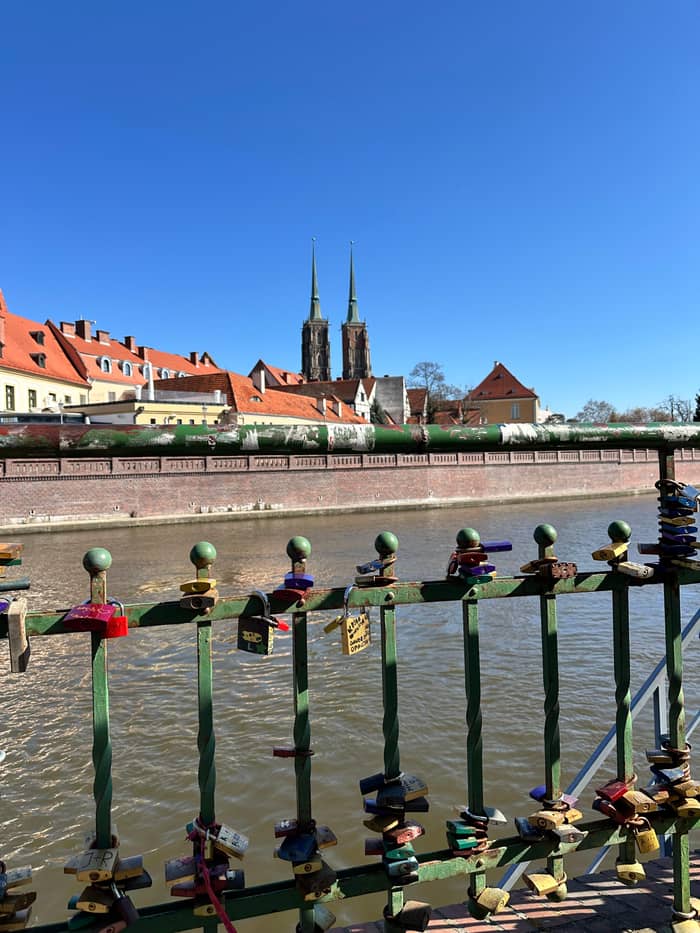
Water shapes the city. The Polish Tourism Organisation counts more than 100 road bridges and footbridges, and the turquoise railings of the Tumski Bridge carry hundreds of love padlocks.12,13 The Oder runs for 26 km within the city limits, so a river view is never far away.14 The city began on one of those islands, as a fortified town on Ostrow Tumski in the 10th century.9
Then there are the dwarfs: small bronze figures hidden in doorways, on railings and at street corners, which turn any walk into a treasure hunt. Tourist information on the Market Square sells maps and dwarf souvenirs.15 They are playful, but they sit inside a serious city. The Centennial Hall is a UNESCO-listed concrete building of 1913 by Max Berg, and the Panorama of Raclawice stretches a single battle scene to 15 by 114 metres around its rotunda.10,16
Culture runs deep for a city of its size. Wroclaw shared the title of European Capital of Culture in 2016 with Donostia-San Sebastian.11 Its restaurants have joined the Michelin Guide, with 23 recommended.17 And the old customs survive: at nightfall a man in a top hat still walks Ostrow Tumski with a long pole to light its gas lamps, which the city says have no equal in Poland.18,19
Each of these cities is worth a visit, and the honest comparison is about character. Krakow has the royal hill and the deepest layers of Polish history; Gdansk has the Hanseatic port and the sea. Wroclaw has rivers and islands, a mix of Gothic, Baroque and modern buildings, and a past shared between several crowns and nations that your walking guide will untangle.
Krakow draws more overnight visitors: the city's own figures put Warsaw and Krakow at the top for overnight stays, with Wroclaw still ahead of Gdansk.29 On the ground that means Wroclaw's squares fill up in summer and at Christmas, yet a weekday morning in spring can still feel like your own discovery.
You do not have to choose. By rail from Krakow the trip is 2h 47 min, and the new timetable adds more trains on the line.30,31 From Warsaw, the Pendolino takes 3 h 34 min.32 A week in Poland can comfortably hold a couple of nights in Wroclaw between the capital and Krakow. Arrive in the afternoon, walk the square at dusk, take the guided walk the next morning and leave after lunch on the following day, and you will have seen the city at its best hours.
Why people come
The setting
The city on the Oder
For all ages
A hunt in every street
The landmark
Modernism on the UNESCO list
Wroclaw feels safe, and official travel advice backs that up. The UK government's advice for Poland says most visitors do not experience any difficulties.4 The usual city cautions apply: watch for pickpockets and petty thieves, hide phones and wallets in crowds, at the sights and in the big stations, and be careful just after using an ATM.28,33
Is Wroclaw safe at night? The Market Square stays lively late, with cafes, bars and restaurants open, and the city portal says life goes on there around the clock.39 The same advice covers nights as anywhere: avoid walking alone in isolated areas late, and use official taxis, which show the company name and number and a rate card on the window.33,34
Bars are where visitors run into trouble. The advice warns that people whose drinks were spiked have been robbed in bars and clubs, and asks visitors to check their bill carefully when buying drinks.36,35 Drinking alcohol in public places is illegal in Poland, so keep the beer inside the beer garden.37 Follow those rules and Wroclaw is as relaxed as it looks.
A city in layers
10th century
A fortified town on the island marks the beginning.9
13th century
The great square is laid out after the city's incorporation.2
1913
Max Berg's concrete hall, now on the UNESCO list.10
2016
A European title shared with Donostia-San Sebastian.11
2025
7 million people visited the city.3
Wroclaw is good value for visitors. You can hold a place on our pay-as-you-wish walk from €17, while e-car rides begin at €15. A tram ride costs PLN 4.60, and the cathedral is free to enter, with PLN 25 for the tower.40,41,42 For a city break in Central Europe, those are friendly numbers, and they leave room in the budget for a good dinner or a river cruise.
The bigger museum tickets stay moderate. The Panorama of Raclawice costs PLN 50 and includes 3 more museums within 3 months, while about PLN 28 opens every hall of the University museum.43,44,45 Many of the best moments cost nothing at all: the square, the bridges, the dwarfs and the lamplighter at dusk. Spend on one museum and one cruise, and let the rest of the city be free.
Cards are widely accepted, so you need little cash beyond a tip for the walking guide and the odd kiosk.38 An ATM at a bank branch is the simplest way to get a few notes on arrival. Our full guide to prices covers tours, fees, transport and food in more detail, with a calculator for your group. In short, Wroclaw is a city where you can spend freely on comfort or travel lean, and still see the same squares, bridges and churches either way.
Video
Ben Robson on YouTube · Playback files load only once you tap play.
A fortified town built on Ostrów Tumski (Cathedral Island) in the 10th Century marked the city’s beginnings.
Travel smart
The city's own numbers show the peaks: summer, in July and August, and December.5 Summer brings long evenings on the river, cruises with music, and boat rentals that run from May until late autumn.26,46 Shows at the multimedia fountain run only between spring and autumn, so an evening there belongs to the warm half of the year.27
December belongs to the Christmas Market, which fills the Market Square for about five weeks.47 This winter it opens on 20 November and closes on 7 January 2027, after more than a million people came to the previous edition.48,23 Book rooms early for those weeks, and expect the square to be busy in the evening. Daytime is calmer, so a morning walking tour followed by the market at dusk is a good rhythm for a winter visit, with mulled wine and a warm stall to end the day.
For a quieter trip, aim for spring or early autumn, when the walks are pleasant and the crowds thinner. The city describes its climate as temperate with oceanic influences, with an average annual temperature of 9.1 degrees.49 Pack a light rain layer whatever the month, since the city records 620 mm of precipitation a year.49 Good shoes matter more than anything, as cobbles and bridges are part of every day here.
History lovers will find a city that has changed hands and names, rebuilt itself and kept its stories. Architecture fans get brick Gothic churches, Baroque halls like the Aula Leopoldina, and the modernist Centennial Hall on the UNESCO list.10 The walking tour is a natural introduction, since the listing takes in the Town Hall, the river crossings, the island churches and the riddle of the city's name.
Families get the dwarfs, of course, and a lot more. The city tourism office points children to Hydropolis, the Kolejkowo model railway and the zoo with its Afrykarium.24 Founded in 1865, the zoo is both the oldest and the largest in the country.25 Older travelers, the office suggests, enjoy the slower pleasures: Ostrow Tumski, the old houses, the parks and a coffee on the square.50,51
Food lovers have more reasons each year, with 23 restaurants now in the Michelin Guide.17 If your idea of travel is a big list of headline sights, Wroclaw may feel modest. If it is a city where you can wander, stop on a bridge and find something unexpected around each corner, it is well worth the trip.
FAQ
The Old Town and Ostrow Tumski fit a 2.5-hour walking tour, leaving time for museums.
UK travel advice says most visitors to Poland do not experience any difficulties.4
Summer and December are the busiest months, by the city's own count.5
Sources
Next read
New to Wroclaw? Ask a real person about the walk.